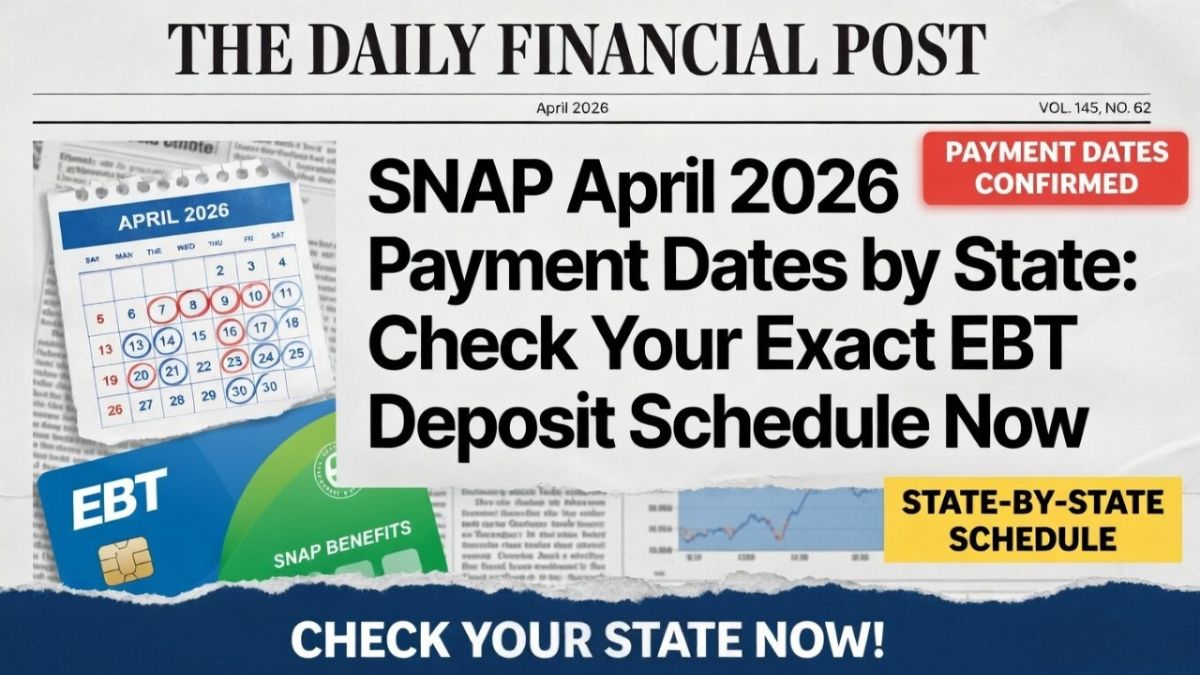
SNAP benefits for April 2026 are now being distributed across the United States, giving financial support to millions of households. These payments are sent through the Supplemental Nutrition Assistance Program, commonly known as SNAP. Most states begin issuing benefits from April 1 and continue until April 28, depending on individual case details. This staggered schedule helps ensure smooth processing and prevents system overload, allowing recipients to receive their benefits on time.
How SNAP Payment Dates Are Decided
The payment date for SNAP benefits is not the same for everyone, as each state follows its own system. In many cases, the deposit date is based on factors like your case number, Social Security number, or even the first letter of your last name. Once assigned, your benefits are loaded directly onto your EBT card on that specific date. Because payments are spread across several days, it becomes easier for both the system and recipients to manage transactions without delays or confusion.
State-Wise Payment Schedule for April 2026
In April 2026, every state has a fixed timeline for distributing SNAP benefits. Some states like Alaska and Vermont issue payments on a single day, while others such as Florida and Texas spread payments throughout almost the entire month. Large states often use extended schedules to handle a higher number of recipients. This structured approach allows families to plan their grocery shopping and monthly budgets more effectively, knowing exactly when their benefits will arrive.

New SNAP Rules Starting April 2026
Important policy changes have been introduced in certain states beginning April 1, 2026. States like Texas, Florida, Colorado, and West Virginia have implemented restrictions on purchasing specific non-essential food items. These include products like soda, candy, and similar items that are not considered essential for nutrition. The purpose of these changes is to encourage healthier food choices and ensure that benefits are used for basic needs. If restricted items are selected during checkout, the transaction may be declined automatically.
Retail System Updates and Compliance
In states where new restrictions are applied, retailers have updated their systems to follow the new rules. For example, stores in West Virginia were given time to prepare but are now fully required to block restricted purchases. This means that all grocery stores must follow the updated SNAP guidelines at checkout. If a customer faces an issue where an eligible item is incorrectly declined, they are advised to contact their local SNAP office for assistance and clarification.
What to Do If Your Payment Is Late
Although SNAP payments usually arrive on time, there can be occasional delays. If your benefits do not appear on the expected date, it is recommended to wait at least 24 hours before taking action. After that, you should check your EBT balance using online services, phone systems, or receipts. If the payment is still missing, contacting your state SNAP office is the next step. In some cases, you may also need to report the issue formally if it is not resolved quickly.

SNAP Eligibility Rules for 2026
Eligibility for SNAP in 2026 depends mainly on income and household size. To qualify, your gross income must generally be at or below 130 percent of the federal poverty level, while net income must fall below 100 percent. These limits are updated regularly to reflect economic conditions. Additionally, able-bodied adults without dependents may need to meet work requirements to continue receiving benefits. Understanding these rules helps recipients maintain eligibility and avoid unexpected interruptions.
Planning Ahead with SNAP Benefits
Knowing your payment date and eligibility status can help you better manage your monthly expenses. Since SNAP benefits are meant to support essential food needs, careful planning can make them last longer throughout the month. Many states also provide online tools and mobile apps to help users track their balance and transactions. Staying informed about updates and rules ensures that recipients can make the most of their benefits without facing unnecessary issues.
Disclaimer
This article is for informational purposes only and is based on general SNAP guidelines for April 2026. Payment schedules, eligibility rules, and state policies may change over time. For the most accurate and updated information, always check with your local SNAP office or official government sources before making any decisions.